Showing posts with label Sci-fi. Show all posts

Friday, 20 October 2017

After-Action Report: The Prologue

  "This cell has been compromised, so only limited information will be relayed by this channel. Your mission hasn't altered – get to the pre-arranged location and retrieve the Mark. You'll know it when you see it."

That was the last communiqué the operatives of the Razor Cell acquisitions team received before all channels went silent. No more information would or could reach them, but that was to be expected. The Shadow Syndicate works so well and evades the long arm of the law precisely because everyone works in the dark.

Going in with poor intel wasn't unusual. It was in the job description.

Thursday, 16 March 2017

Ad Astra: Breaching Pods

Does this count as stealth?
If you're a fan of science fiction and haven't already been watching The Expanse, do yourself a favour and take a look at the trailer to see what you've been missing. The series is great television, with a gripping storyline and good acting, while also being pretty damn scientifically accurate.

The second season's introductory two-parter involved an assault on an unregistered rotating space station, with an ex-Martian gunship and a cobbled-together Belter transport matched up against a single advanced stealth frigate. One character, Detective Miller, decided to join the assault teams, meaning he has to be on one of the breaching pods that will be launched towards the station. Before we see them on-screen, one character describes them as "a beer can taped to a rocket".

As you can see from the gif, he's not wrong.

Wednesday, 1 March 2017

Ars Mundi: The Gravity Highway


When a working principle of manipulating gravity was discovered, the general populace went mad. "It's just like Star Wars!!" the popsci websites and blogs shouted, rabid with the idea of being able to take to the stars in spaceships that could accelerate so fast as to get to lightspeed in mere days. As usual, the scientists had to destroy their ill-conceived dreams – gravitics still have to obey the conservation of momentum. Just like you can't push your car forwards while sitting inside it, you can't speed a ship up with a gravity generator on board. The reaction force has to go somewhere. Dreams of routine space travel were smashed. All the technology really offered was artificial gravity on-board spaceships, and zero-gravity chambers on Earth. Anything else was impossible, it seemed.

It took about five years for someone to figure out a solution to the problem: the gravity highway.

Monday, 27 February 2017

Ad Astra: Gravitic Propulsion

What a diametric drive looks like, according to Google
One of the things I've had in the works for a while was a post about gravity manipulation technology as a setting element, how it affects other technologies, daily life, etc. This was originally conceived as a single post but quickly grew too big and unwieldy to be digestible. One of the most mature elements of the post was a discussion of gravitics used for space propulsion.

The standard approach to using gravitic propulsion in GURPS is to just slap reactionless drives on your spacecraft and call it a day. But this misses out on some cool opportunities! So let's take a deeper look at how gravitic propulsion might work.

Tuesday, 14 February 2017

Ad Astra: Shift Drive

Ludicrous speed... engage!
For some reason, I love space opera but hate reactionless drives. The two are usually part-and-parcel, since space opera tends to have spacecraft that travel at the speed of plot, but there are some exceptions. But reaction mass limited spaceships creates a problem, in that non-FTL travel inside a star system takes, at absolute best, days. If you want your players to be able to hurry to their ship, burn for escape velocity and dash towards the gas giant moon to save the stranded scientists... reaction drive travel means there's a period of a week or two where they're twiddling their thumbs. Kinda saps the tension out of the scene.

This isn't the end of it – there are plenty of ways to make this kind of timescale work in your setting. But if you want to use more conventional plots and timescales, you need a way for people to travel fast inside a solar system, and that means FTL. But this takes all the fun out of reaction drives! If all they're used for is getting to and from orbit, then they cease to be interesting.

So what if FTL travel requires deltaV too?

Sunday, 15 January 2017

Playbook: Attribute Penalties in Different Gravity

Jumping on Earth (left) and on the Moon (right)
I was writing up some character creation advice for a sci-fi game I hope to run soon and begun trying to explain how to buy advantages to represent experience with working in different gravities, as the setting lacks artificial gravity.

In order to give advice, I had to understand the rules, so I went through and read them (GURPS Basic Set, p. 350).

I quickly found them confusing, badly explained and broken. So in an effort to make them easier to understand and use (especially for newer players) I made some modifications.

Thursday, 1 December 2016

Dramatis Personae: Ilia Elektrostal, Ex-Corporate Freemerchant Captain

Born on one of the harsher Russian colony worlds, Ilia had a typical colonial upbringing, lacking in excitement or stimulation. Perhaps that was why she had always ascribed a poetic wonder to space travel, and why she eventually decided that it was what she wanted to do for a living. She signed on with Dmitry-Akata, a medium-sized interstellar haulage corporation, who paid her a pittance for her job as a cargo engineer. But it didn't matter to her – she was getting to travel the great empty black.

She worked with them for eight years, rising to quartermaster, then first officer, then captain of her own ship, the CSV Jubilant Snowflake. By the time she was 29, space had lost some of its wonder, replaced by the day-to-day grind of tight deadlines, low overheads and demanding journeys. Perhaps part of her fatigue was from taking so much shit from Dmitry-Akata – pay rises lagging behind inflation, cuts to health insurance, overtime encroaching on paid leave and a million more little insults. All while the unions utterly failed to exert any pressure to improve their working conditions.

Finally, eventually, the camel's back broke. During a night of drinking with her crew planetside, they started all expressing the same sentiment: fuck Dmitry-Akata. Drunken, joking plans to liberate their ship from corporate hands were made, half-assed and filled with in-jokes. When the hangovers cleared the next morning, they all seemed to have decided that the old adage of "drunken words are sober thoughts" had a grain of truth to it.

They were going to steal their own ship.

Thursday, 24 November 2016

Ad Astra: Singularity Rider

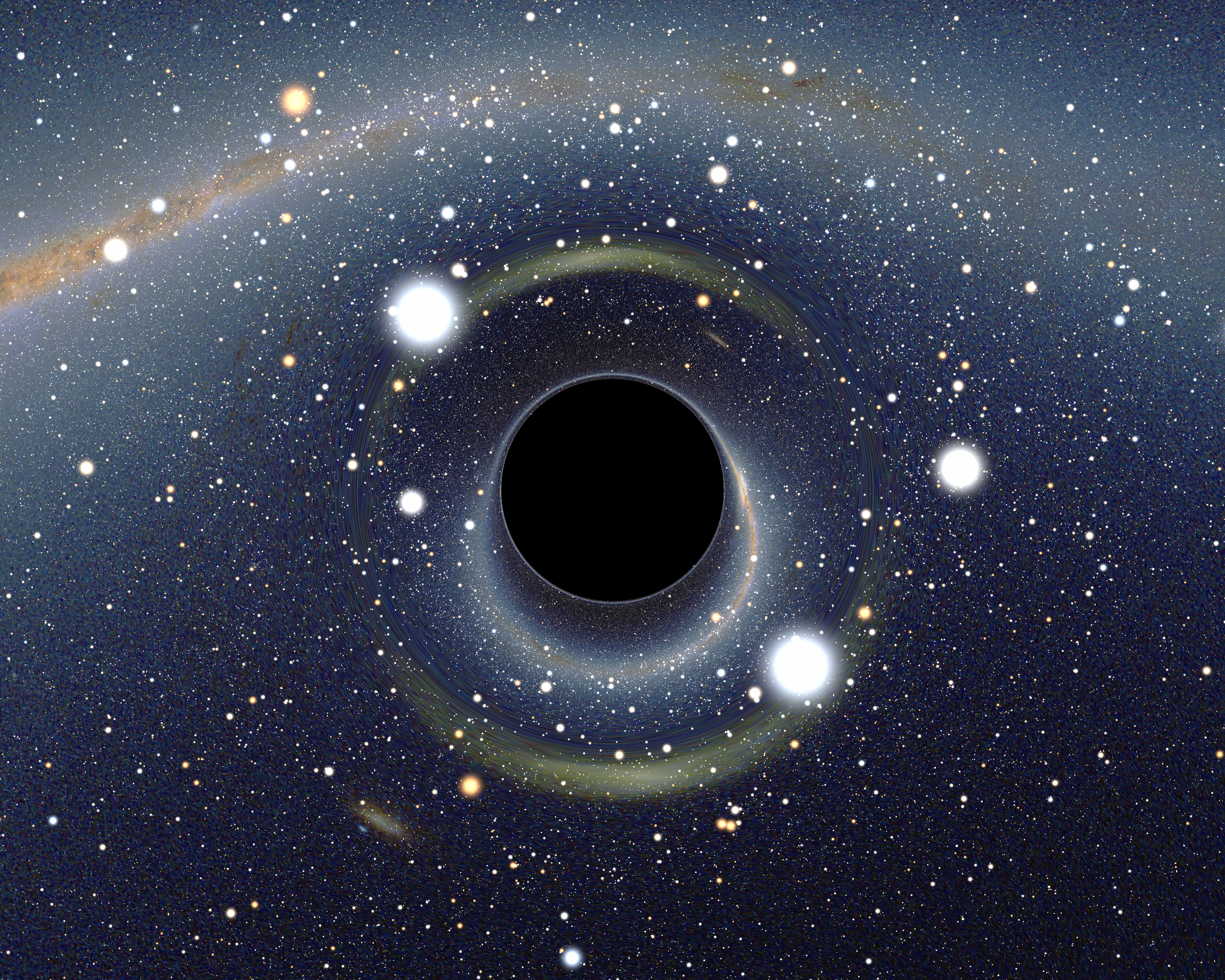
Horrible cosmic deathtrap or delicious
starship power supply?
It's a new column! And it's not the one I mentioned before! Surprise!

Just about the only promising way for humans to travel the vast distances between stars within a lifetime is the black hole starship. The basic operating principle is simple and also totally nuts. You collapse matter to make a black hole massing in at around 606 kilotons. Given it's so small, it releases intense Hawking radiation – this can be deflected out the back to provide thrust directly or used to heat reaction mass. Estimates of power output place black hole drives as being able to accelerate to 10% of lightspeed in about 20 days. Assuming a uniform acceleration rate (which is wrong due to relativity but a decent approximation), you could get to near-lightspeed in just under seven months.

Once you can get going that fast that quickly, the galaxy opens up a lot. Travel times are still measured in decades but at such a high fraction of lightspeed, time on-board the starship goes slower, so you could feasibly travel anywhere within a few hundred lightyears in only a few years (from your perspective).

So let's build one in GURPS Spaceships!

Sunday, 2 October 2016

Rogues Gallery: Junker Exo

Something like this but with more taped-on scrap metal
Boss fights are a staple of traditional fantasy RPGs. As you may have noticed, I heavily lean towards science fiction rather than fantasy but the concept of a boss fight sometimes has difficulties making that transition. Especially in games like GURPS where the fragility of individual humans is relatively constant, boss fights will often tend towards one of two extremes. Either the fight is an anticlimax, with the Big Bad going down from a few well-placed shots like most people do; or the Big Bad seems perfectly fine after taking a full power cell's worth of laser shots to the chest, ruining the players' suspension of disbelief that they are in fact a regular human and not some kind of thinly-disguised killbot. Although a thinly-disguised killbot would actually make a pretty good boss fight...


But there's an idea that I've had brewing in my head for a while that allows a little bit of both and it involves Ultra-Tech's exoskeletons, relying on them to provide the two things that make many traditional boss fights: an enemy that's both big and tough.

Tuesday, 1 March 2016

Playbook: Zero-G Dodge

GURPS rarely reduces a character's active defences due to environmental factors. My guess is that this is more of a game balance choice than a realism one, since Dodge is typically already low for non-superpowered characters and dropping it down even a single point represents a huge decrease in survivability, especially against ranged weapons where Dodge is the only available defence. I've recently been planning for a sci-fi campaign in a setting with no artificial gravity and decided I wanted a set of rules for dodging attacks in free fall, to help drive home the feeling of a different environment. So I came up with three different mechanics, which you can pick at your leisure.

Sunday, 28 February 2016

Ars Mundi: The Serpens Codex

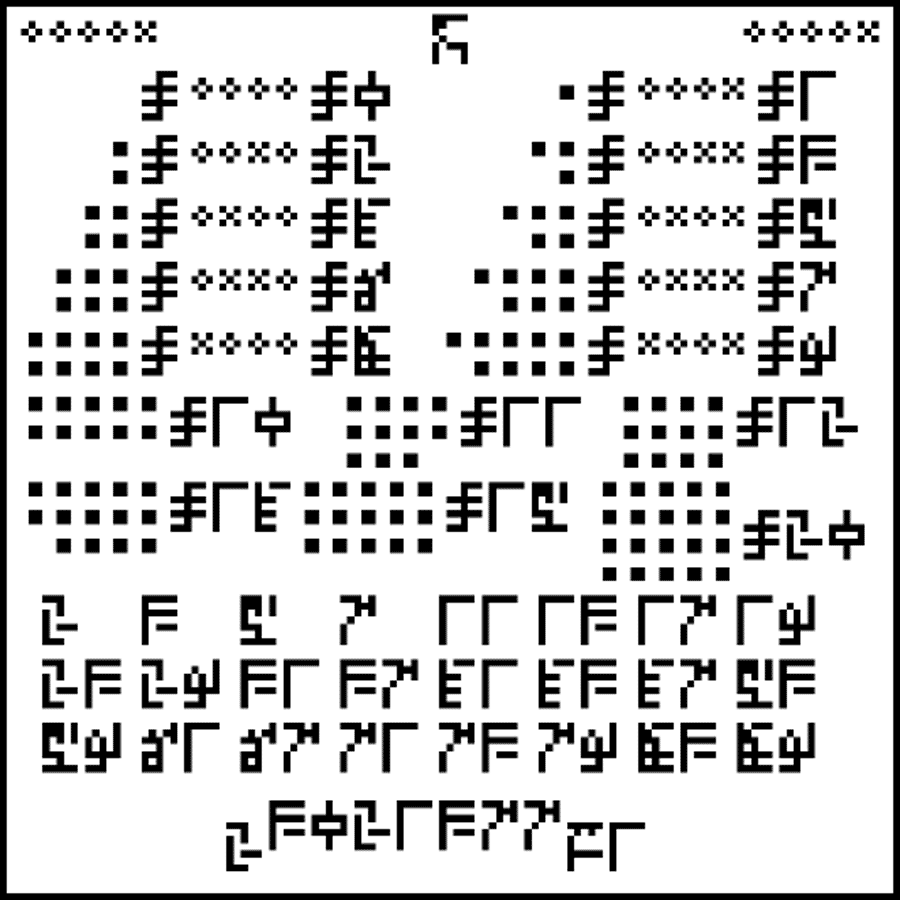
Arecibo saw it first, by pure chance. In the ever-present radio noise of the universe, a small blip, 24 times as strong as the background. Two blips. Three blips. Then five, seven, eleven, thirteen and seventeen blips. Then it repeated. Seven prime numbers. The signal repeated over and over again and as the Earth turned, every radio observatory around the world trained their receivers on the constellation of Serpens. The pattern repeated for forty-seven days, during which time scientists hotly debated what it meant. But the initial consensus was immediate:

We were not alone.